Running Shoes vs. Walking Shoes: What’s the Real Difference?

Choosing the right shoes for our workouts is key. We often debate whether to pick running shoes or walking shoes. The main difference is in their design, made for each activity's needs.
Running shoes are built to handle high impact. They offer support and cushioning for intense workouts. In contrast, walking shoes focus on comfort and stability. They're perfect for lower-impact exercises.
Knowing these differences helps us pick the right performance wear for our goals. In this article, we'll explore each shoe's unique features. This will guide you in choosing the best shoes for your needs.
Key Takeaways
- Running shoes are designed for high-impact activities with a focus on support and cushioning.
- Walking shoes prioritize comfort and stability for lower-impact exercises.
- Understanding the differences between running and walking shoes is crucial for choosing the right footwear.
- The design of each type of shoe is influenced by the specific demands of the activity.
- Selecting the right shoe can enhance your overall fitness experience.
Understanding the Fundamentals of Athletic Footwear
https://www.youtube.com/watch?v=YGw2cSouHCY
Choosing the right athletic shoes is key. They come in many types to fit different sports and activities. Each shoe is made to support the specific movements and stresses of various activities.
The Science Behind Specialized Athletic Shoes
The science of athletic shoes is based on biomechanics and activity needs. For example, running shoes need cushioning and support for impact absorption and forward motion. In contrast, walking shoes focus on stability and flexibility for a more linear motion.
Why Proper Footwear Matters for Different Activities
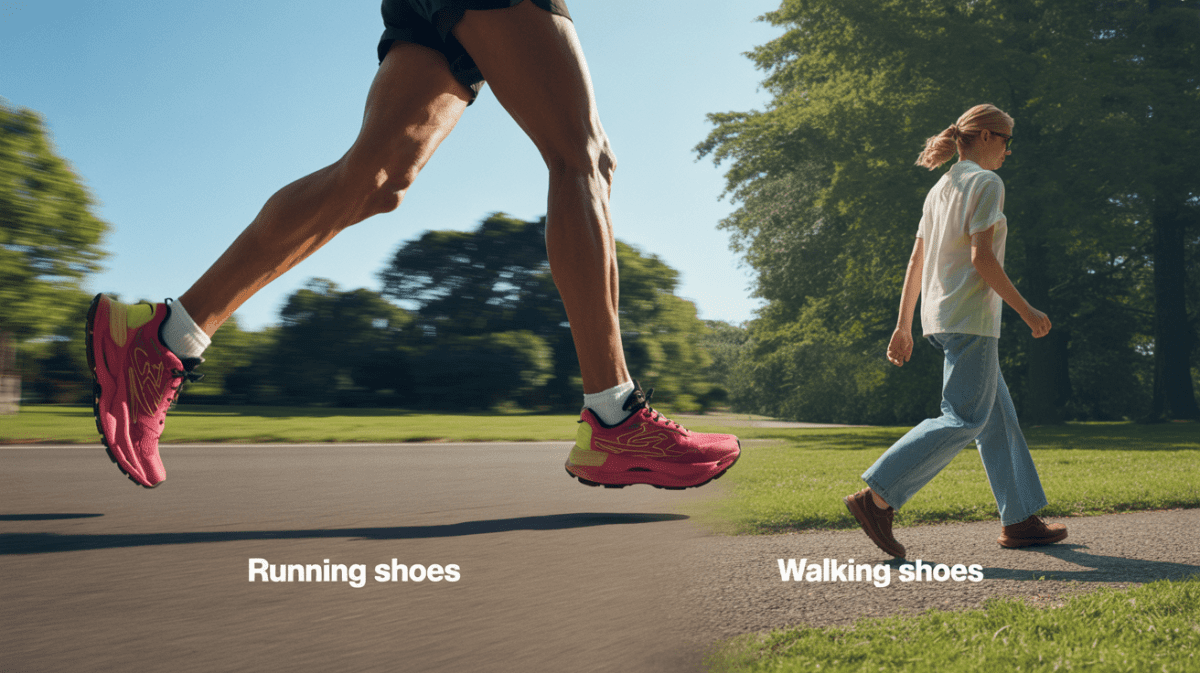
Wearing the right shoes is vital for better performance, injury prevention, and comfort. Nike points out that running and walking require different shoe designs. Runners have a unique phase where both feet are off the ground, while walkers always have one foot on the ground. This shows why shoes should match the activity.
| Activity | Key Shoe Features | Benefits |
|---|---|---|
| Running | Cushioning, Support, Impact Absorption | Enhanced Performance, Injury Prevention |
| Walking | Stability, Flexibility, Comfort | Improved Comfort, Reduced Fatigue |
Running Shoes vs. Walking Shoes: What's the Real Difference?

Choosing the right shoes for your workout is key. Knowing the difference between running and walking shoes is important. Each type supports different activities with unique features.
Design and Construction Differences
Running shoes are made to be flexible and responsive. They have a bigger toe spring for a smooth transition. Walking shoes focus on comfort and stability, with arch support and a rigid heel counter.
Cushioning and Impact Absorption
Running shoes have advanced cushioning systems for high impact. They use thick midsoles and materials like gel or air. Walking shoes have less cushioning since walking is less impactful.
Flexibility and Motion Control Features
Running shoes support the foot's natural motion. They have motion control features for stability. Walking shoes are more stable, with rigid structures for support.
Weight and Breathability Comparison
Running shoes are lighter and more breathable. They help manage sweat during workouts. Walking shoes are slightly heavier, with more support features.
In summary, running and walking shoes differ in design, cushioning, flexibility, and weight. Knowing these differences helps you pick the right shoe for your activity. It improves your performance and comfort.
Key Features of Running Shoes

To get the most out of your runs, it's essential to understand the key features of running shoes. Running shoes are designed to provide support, comfort, and performance enhancement for runners. In this section, we'll explore the critical features that make running shoes effective.
Heel-to-Toe Drop and Its Importance
The heel-to-toe drop, also known as the offset, is a crucial feature in running shoes. It refers to the difference in height between the heel and the toe. A higher drop can provide more cushioning and support for runners with a heel-strike pattern. On the other hand, a lower drop encourages a more natural running form and is often preferred by runners with a midfoot or forefoot strike. Understanding your running style and choosing the right heel-to-toe drop can significantly impact your comfort and performance.
Midsole Technology and Materials
The midsole is the layer between the outsole and the upper part of the shoe, responsible for cushioning and shock absorption. Modern running shoes often feature advanced midsole materials like EVA (Ethylene-Vinyl Acetate) or PU (Polyurethane), which provide a responsive and comfortable ride. Some shoes also incorporate innovative technologies such as gel cushioning or air units for enhanced shock absorption. The choice of midsole material and technology can greatly affect the overall feel and performance of the shoe.
Specialized Features for Different Running Styles
Different runners have different needs based on their running style, foot pronation, and personal preferences. Running shoes often include specialized features to cater to these needs. For example, runners with overpronation may benefit from shoes with stability or motion control features, while those with supination may prefer shoes with more cushioning. Understanding your running style and choosing a shoe that matches your needs can help prevent injuries and improve your running experience.
Durability and When to Replace Your Running Shoes
The durability of running shoes is a critical factor, as it directly impacts their performance and comfort over time. Most running shoes are designed to last between 300 to 500 miles, depending on factors such as running style, body weight, and terrain. Regularly inspecting your shoes for signs of wear, such as sole wear, upper material degradation, or loss of cushioning, can help you determine when it's time to replace them. Replacing your shoes at the right time ensures that you continue to get the support and performance you need.
Essential Characteristics of Walking Shoes

The right shoes are key for a great walk. They offer comfort and support, vital for both casual and serious walkers. Let's look at what makes walking shoes perfect for their job.
Arch Support and Stability Features
Arch support and stability are crucial in walking shoes. Proper arch support spreads out your body's weight, easing foot and ankle strain. This is especially helpful for those with flat or high arches.
Stability features are also key, especially for those who overpronate or supinate. They keep the foot aligned, lowering injury risk. This leads to a smoother, more comfortable walk.
Heel Construction and Comfort Elements
The heel of walking shoes is vital for comfort. A well-made heel cushions each step, easing heel and ankle stress. Cushioning technologies and materials in the heel absorb shock, making walks more comfortable.
Comfort also comes from breathable materials and padded collars. These keep your feet cool and dry, and prevent irritation. This lets walkers focus on their walk without discomfort.
Traction, Outsole Design, and Versatility
Traction and outsole design are critical for walking shoes. The outsole provides optimal traction on different surfaces. This is thanks to special tread patterns and rubber compounds.
Versatility is another important feature. Many walking shoes work well for various conditions, from casual walks to hikes. This makes them a great choice for those who walk in different places.
Knowing what makes walking shoes great helps you choose the right pair. Whether you need arch support, heel comfort, or traction, there's a shoe for you.
Conclusion: Choosing the Right Shoes for Your Activity
Choosing the right shoes depends on the activity's needs and your personal preferences. It's important to know the difference between running and walking shoes. This knowledge helps ensure you're comfortable and perform well.
We looked at what makes running shoes special. This includes the heel-to-toe drop and midsole technology. We also talked about how different running styles require specific features.
Walking shoes have their own key features. These include arch support, heel construction, and traction. These help walkers stay comfortable and stable.
When picking performance shoes, think about your main activity. Runners need shoes with good cushioning and support. Walkers should look for shoes with strong arch support and stability.
To find the best workout shoes, consider your foot type and how you run or walk. Also, think about what you personally prefer. This way, you can choose shoes that make your exercise routine better and safer.
FAQ
Q: What is the main difference between running shoes and walking shoes?
A: Running shoes are made to handle high impact and offer more support and cushioning. Walking shoes focus on comfort and stability for lower-impact activities.
Q: How do I choose the right shoes for my fitness activities?
A: Think about what you're doing, your foot type, and what you like. Runners need cushioning and support. Walkers should look for comfort and stability.
Q: What is heel-to-toe drop, and why is it important in running shoes?
A: Heel-to-toe drop is the height difference between the heel and toe. A lower drop helps your stride feel natural. A higher drop offers more cushioning.
Q: What are the benefits of midsole technology in running shoes?
A: Midsole technology adds cushioning, support, and stability. It comes in different materials and designs, affecting comfort, durability, and performance.
Q: How often should I replace my running shoes?
A: Replace your shoes every 300-500 miles or 3-6 months. This depends on how much you run, your style, and personal needs.
Q: What features should I look for in walking shoes?
A: Look for arch support, heel construction, and traction. These features help with comfort, stability, and performance while walking.
Q: Can I use running shoes for walking, or walking shoes for running?
A: Running shoes for walking might be too heavy and cushioned. Walking shoes for running lack support and cushioning, which can cause discomfort or injury.
Q: How do I know if I need athletic footwear with more support or stability?
A: If you have flat feet, high arches, or other foot issues, you might need extra support or stability. A footwear specialist or healthcare professional can help find the right shoe for you.
Q: What is the importance of traction and outsole design in walking shoes?
A: Traction and outsole design are key for stability and grip. A good outsole prevents slipping and boosts walking comfort.
Q: Can the right shoes really improve my performance and comfort during exercise?
A: Yes, the right shoes can greatly improve your performance and comfort. They reduce injury risk, improve stability, and provide the support and cushioning you need.